

Spot Greenwashing in Retail Before You Buy
Last Updated: October 27, 2026
Greenwashing Examples in Retail: Red Flags to Catch
Spotting greenwashing in retail starts with one fact: a green label is not proof of anything.
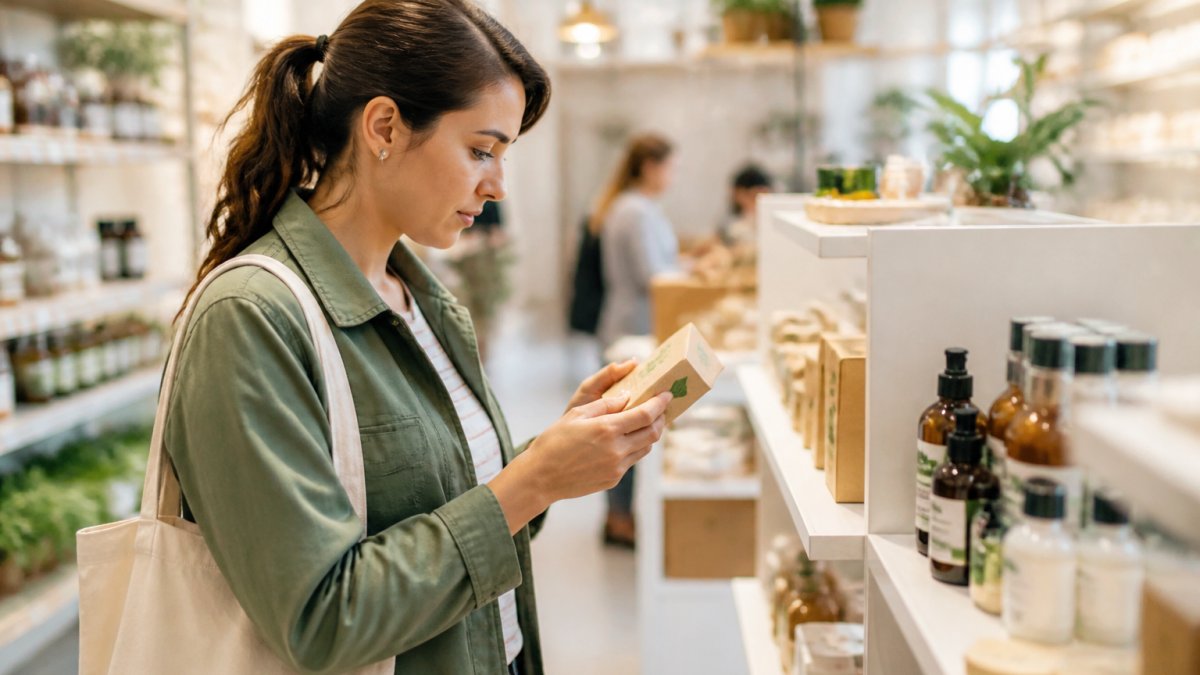
Greenwashing is making a product look greener than it is through vague wording, leafy packaging, and unproven claims. Watch for vague language, nature imagery, hidden trade-offs, exaggerated claims, partial disclosure, missing certification, and fine-print qualifiers.
How to Verify Sustainability Claims Before You Buy
A claim holds up when a brand shows specific evidence, not a slogan. Name the exact claim, look for a number, find the certification, check the supply chain, then search outside the brand.
Every item comes from a freedom business. For more, browse our guide to ethical gifts online that give back.
Eco-Friendly Product Labels Explained: What the Words Actually Mean
Label terms are where greenwashing hides best: each phrase sounds impressive but only means something with proof attached.
Our Peace Silk Pillowcase is undyed and organic. Our Block Print Hair Scrunchies use upcycled fabric. Our Mended collection is a real-world example of a social impact brand whose story backs up its claims.


Your Sustainable Shopping Checklist
Run this two-minute checklist before checkout: can you name the exact claim, recognize a third-party certification, trace the supply chain, and find independent reporting? If you cannot tick four boxes, slow down, a trustworthy brand makes these answers easy to find.
At EndCo Emporium every product is ethically made by a vetted freedom business.
The hardest part of ethical shopping is not spotting the fakes. It is finding brands you can actually trust. EndCo Emporium curates goods from freedom businesses, so every purchase supports survivors and women facing barriers to employment. Browse our collection to shop with purpose and see the impact behind each item. Get started with EndCo Emporium and buy goods whose story you can verify.
